
Basic Technique
Stances, blocks, strikes and kicks appropriate to your current rank, performed with accuracy, balance and control.
Progression & Grading
Structured training, measurable goals and continued development — from your first class through coloured belts and onward to advanced training.
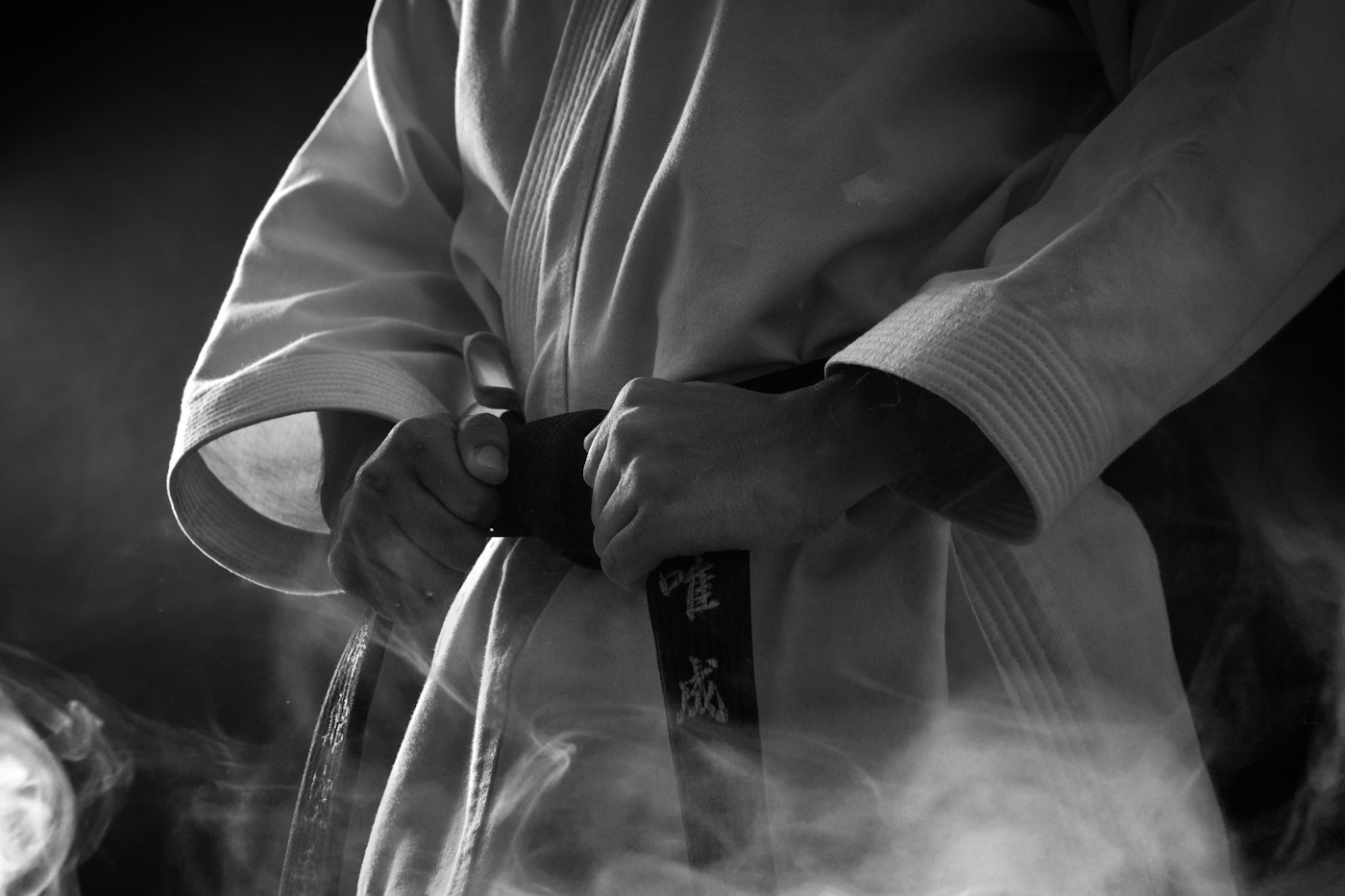
How Gradings Work
In Taekwondo, coloured-belt ranks are called Kup grades. Every beginner starts at 10th Kup (white belt) and works up through the ranks towards 1st Kup — the final step before black belt.
Promotion opportunities — known as gradings — take place in a club setting, typically around every three months. At each grading you demonstrate the techniques and knowledge appropriate to your current rank.
Gradings are not about perfection. They are a structured checkpoint: a chance to show what you have learned, receive feedback, and move forward with a clear goal for the next stage.
Start
Begin at 10th Kup — white belt — learning the foundations of movement, etiquette and technique.
Train
Around three months of consistent training between each promotion opportunity.
Grade
Demonstrate technique, poomsae, self-defence, sparring and theory at your level.
Progress
Earn your next belt, set new goals, and keep building towards 1st Kup — and then black belt.
Belt Progression
Kup grades run from 10th Kup (white belt) up to 1st Kup, before the move to black belt. Between each full colour sits a stripe belt — a halfway step that keeps every goal within reach.
Grading eligibility and promotion follow the academy's applicable syllabus and recognised organisational requirements. Grading dates and fees are shared with members as they are confirmed.
What Gradings Assess
Each grading looks at a rounded set of skills — not just kicking. Here is what you will be working towards at every level.
Stances, blocks, strikes and kicks appropriate to your current rank, performed with accuracy, balance and control.
Traditional patterns that build precision, timing and technical understanding — new poomsae are learned as you progress through the ranks.
Awareness, boundary-setting and appropriate defensive responses, taught and assessed in an age-appropriate way.
Controlled sparring that demonstrates the practical application of techniques, movement and timing.
Taekwondo terminology, rules and general knowledge of the art — understanding what you practise, not just how.
Black Belt & Beyond
With consistent training, students typically reach black belt in around three years from beginner level. From there, Taekwondo opens into Dan (black belt) ranks — a path of deeper study, leadership and lifelong learning.
Black belt ranks earned through recognised national Dan gradings can be certified by Kukkiwon, the World Taekwondo Headquarters in Korea — recognition that is understood at Taekwondo clubs around the world.
Minimum training time between black belt gradings:
Dan progression continues to Grand Master ranks — Taekwondo truly is a lifelong journey.
MyTKD members have access to an online student progress portal where students and parents can monitor progress between classes — with comments and tips from instructors to help every student prepare for their next grading.